 Written by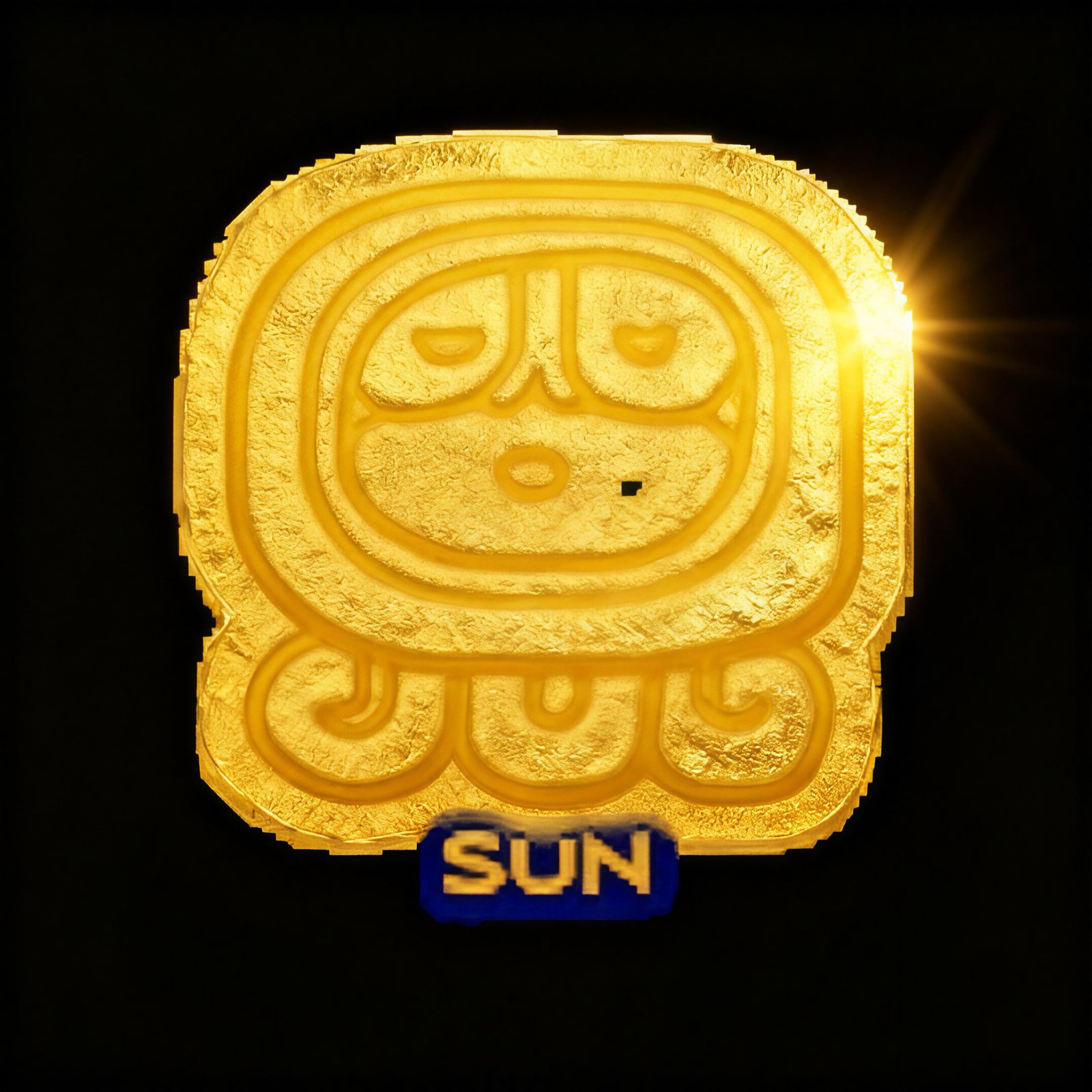
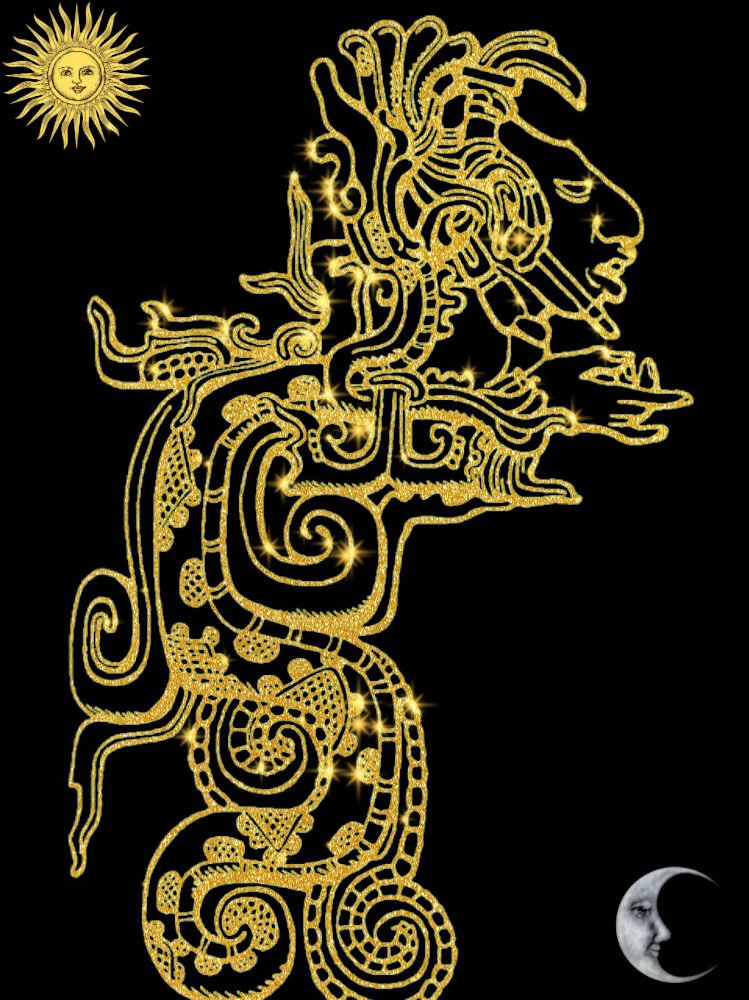
Like the Venus sign, which is the sign of the Priest-King archetype of Quetzalcoatl, the Ahau/Ajpu/Xochitl sign is the other day sign that was looked for in a ruler in ancient Mesoamerica/Atlantis. In the K’iche’ Maya language of the Popol Vuh, this day sign is called Ajpu. This is not a coincidence. One of the Hero Twins is named Jun Ajpu (One Ajpu or Hunter). His very identity is the day sign Ajpu/Sun, as Quetzalcoatl is Lamat/Venus’.
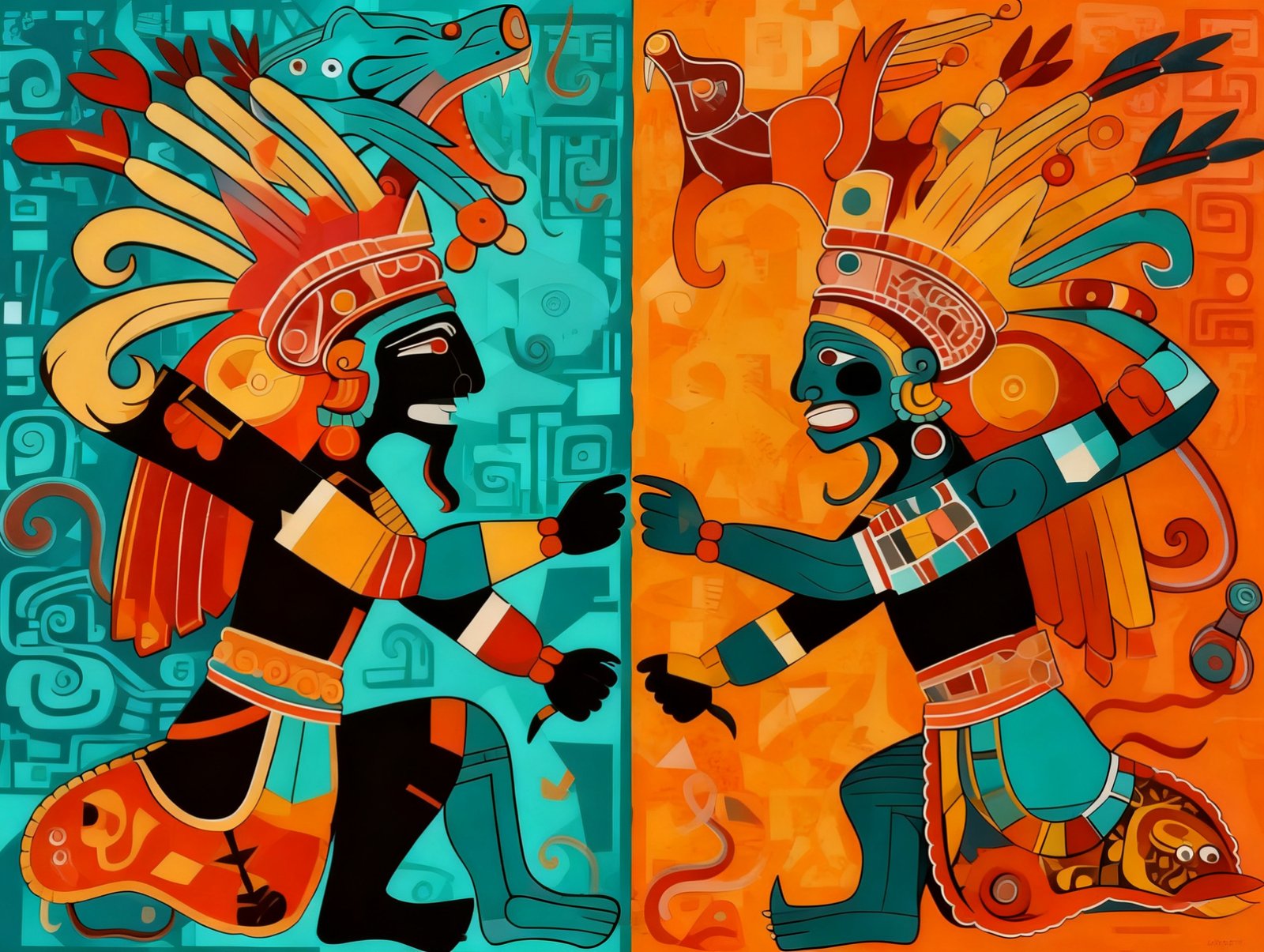
This directly ties the day’s energy to the archetype of the Hero Twin, the defier of death, and the sacred hunter.
Understanding Ajpu as a Day Sign
In the K’iche’ Maya calendar system, which uses a cycle of twenty day signs combined with thirteen numbers to create a 260-day sacred round, Ajpu occupies the final and most exalted position. The name itself can be translated as “blowgunner” or “hunter,” which immediately connects us to the Hero Twins, who were legendary hunters with their blowguns before they became cosmic heroes. But Ajpu carries meanings that go far beyond this literal interpretation.
Think of Ajpu as representing completion and mastery, but not in a static sense. It’s the completion that contains within it the seed of new beginning, much like how the twins’ death and transformation led to the sun and moon that mark each new day. When the calendar reached the day named Ajpu, the K’iche’ Maya understood they were touching something both final and inaugural, an ending that promised renewal.
The Twins as the Physical Manifestation
The Hero Twins didn’t just happen to share characteristics with Ajpu—they were understood to BE Ajpu in its most complete expression. Here’s where we need to think carefully about how the Maya understood the relationship between time, divinity, and narrative. Days weren’t just units of measurement; each day carried its own spiritual energy and divine personality. When the day Ajpu arrived, the energy and essence of Hunahpu and Xbalanke were believed to be especially present and active in the world.
Consider how perfectly the twins’ story maps onto what Ajpu represents. They were hunters and blowgunners, which gives us the most surface connection. But go deeper and you see they embody the principle of completion through transformation. They completed the unfinished business of their father’s defeat, they completed the cycle of descent into death by rising again, and they completed their earthly existence by transforming into celestial bodies that complete each daily cycle.
The Solar Connection
Hunahpu’s name itself provides a crucial clue to this connection. In K’iche’ Maya, “Hun” means one, and “Ajpu” is that final day sign we’ve been discussing. So Hunahpu literally means “One Ajpu” or “One Hunter.” This isn’t coincidental naming—it’s a direct statement that this hero IS the embodiment of that day sign’s energy at its most unified and powerful. When people in the community were born on the day 1 Ajpu, they carried Hunahpu’s name and were thought to share in his solar, heroic qualities.
Understanding this helps us see why Hunahpu became the sun. The sun itself, in Maya thought, completes a heroic journey every day—descending into the underworld (sunset), battling through darkness, and emerging victorious at dawn. This daily solar journey mirrors the twins’ mythic journey through Xibalba. Every sunrise reenacts their victory over the death lords. The day sign Ajpu, then, becomes a moment when this solar heroism is particularly accessible and present.
Xbalanke and the Complementary Duality
Now, Xbalanke role adds necessary complexity to our understanding. While Hunahpu represents the solar Ajpu energy, Xbalanke—who became the moon and is often associated with the jaguar—represents the nocturnal, shadowy complement. Think of it this way: you cannot have a day sign without the night that surrounds it, you cannot have solar triumph without the darkness it must overcome, and you cannot have the concept of “hunter” without the wilderness that is hunted.
The Maya understood reality as fundamentally dual and complementary. Xbalanque doesn’t diminish Ajpu; he completes it. Together, the twins represent the full spectrum of what Ajpu means—both the light of accomplished heroism and the shadow-walking cleverness that makes such accomplishment possible. His name, which means “Jaguar Sun” or “Night Sun,” bridges the wild and the celestial, the hunted and the hunter, in ways that enrich our understanding of Ajpu as a sign of mastery over opposing forces.
Ajpu in Ritual and Divination
When K’iche’ Maya daykeepers and spiritual guides worked with the calendar for divination or ritual purposes, days marked by Ajpu carried special significance. These were considered powerful days for endings and beginnings, for seeking justice, for honoring ancestors, and for connecting with the solar energy that sustains life. The Hero Twins’ story informed how people understood what might happen or what should be done on such days.
Imagine a person born on a day named Ajpu consulting a daykeeper. That person would be understood to carry some of the twins’ qualities in their destiny—perhaps a talent for overcoming obstacles through cleverness, a connection to solar vitality and leadership, or a life path that involves completing what others left unfinished. The daykeeper might invoke the Hero Twins’ story to help that person understand their challenges and strengths, using the myth as a kind of template for understanding individual destiny.
The Artistic and Symbolic Representation
In K’iche’ and broader Maya art, the day sign Ajpu appears as a specific glyph, and you can often see visual elements that reference the Hero Twins within or around this glyph. You might see blowgun imagery, the ball game equipment, or even stylized representations of the twins themselves. Some representations show the glyph incorporating solar imagery—rays, circles, or other markers of the sun’s presence—directly linking the sign to Hunahpu’s celestial transformation.
What’s fascinating is how this creates a kind of circular meaning-making. The glyph refers to the day, the day embodies the twins, the twins’ story explains why the day has the qualities it does, and the visual representation of the glyph incorporates elements from the story. Everything reflects everything else, creating a web of meaning where mythology, timekeeping, art, and spiritual practice all reinforce one another.
The Narrative of Triumph Over the Underworld (Xibalba)
The Hero Twins weren’t just characters in an old story. They were living forces, accessible through the calendar, present in every cycle of sun and moon, and manifested in every person who carried their day sign. Ajpu served as a kind of doorway through which people could connect with these ancestral heroes and draw on their power for contemporary challenges.
The story of the Hero Twins, Jun Ajpu and Xb’alanke, is a saga of loss, cunning, and ultimate victory that maps perfectly onto the Ahau sign’s themes:
· Inherited Legacy: Their father and uncle, also named One Ajpu and Seven Ajpu, were great ballplayers and lords who were tricked and sacrificed by the Lords of the Underworld (Xibalba). The Twins, therefore, represent the new generation avenging and transcending their ancestors—a core Ahau theme of ancestral connection and royal lineage.
· The Ballgame as Cosmic Struggle: They challenge the Lords of Xibalba to the sacred ballgame, which is not a sport but a cosmic battle between life/death, order/chaos, and the skies/the underworld. Ahau, as the zenith day, represents the force of celestial order.
· Cunning and Transformation: Unlike their father, they don’t fall for the tricks of Xibalba. They use intelligence, magical transformations (like becoming catfish or morphing into vagabonds), and survive deadly tests (the Bat House, the Razor House). This represents the mastery and enlightened intelligence of the Ahau energy.
· The Ultimate Victory: Defeat through Illusion and Ascension: Their final triumph is not brute force. They stage an illusion where they are killed and resurrected, fascinating the Xibalbans, whom they then trick into sacrificing themselves. This act of sacrificial reversal is the ultimate victory of life over death.
· Apotheosis: Becoming the Sun and the Moon: After their victory, the Twins do not return to the normal world. They ascend to the sky.
· Jun Ajpu becomes the Sun.
· Xb’alanke becomes the Moon (often mistakenly the planet Venus, the Morning Star, which is actually associated with the god Quetzalcoatl and day sign Venus. Xb’alanke means “Jaguar Sun” or “Hidden Sun” and he’s associated with jaguars, night, and the moon).
This is the ultimate expression of the Ahau sign: becoming the celestial lord, the luminous body that rules the day (or night), providing life, order, and cyclical time. The Hero Twins represent themes of duality, resurrection, and the triumph of wit over brute force.
The Legend of the Hero Twins
The Twins’ Origins and the Underworld Challenge
The story actually begins with the twins’ father and uncle, Hun Hunahpu and Vucub Hunahpu, who were passionate ballplayers. In Mesoamerican cultures, the ball game wasn’t just sport—it was a ritual with deep cosmic significance.
The noise from their constant playing on the surface of the earth disturbed the Lords of Xibalba, the dark underworld realm ruled by death gods like One Death and Seven Death. These lords invited the brothers to come play ball in Xibalba, but this was really a trap. Through a series of trials in deadly houses—the Dark House, the Razor House, the Cold House, the Jaguar House, and the Bat House—the lords killed Hun Hunahpu. His head was cut off and hung in a calabash tree as a trophy and warning.
Here’s where the miraculous conception occurs: a young underworld maiden named Xquic (Blood Moon) approached the tree out of curiosity. The skull of Hun Hunahpu spat into her hand, magically impregnating her. When her father discovered her pregnancy, he ordered her killed, but she escaped to the surface world. There she gave birth to the Hero Twins, Hunahpu and Xbalanque.
Growing Up and Early Adventures
The twins grew up as skilled hunters and, crucially, inherited their father’s love of the ball game. But their childhood wasn’t easy—their grandmother favored their older half-brothers, who were jealous and cruel. The twins endured this treatment with patience, but they also demonstrated their supernatural powers early on. In one telling episode, they transformed their arrogant half-brothers into monkeys when the siblings tried to humiliate them, showing that the twins combined mercy with a sense of cosmic justice.
The twins were also connected to the natural and agricultural world. Some interpretations link Hunahpu to the sun and maize, while Xbalanque is associated with the moon and the jaguar, representing the duality that the Maya saw as fundamental to existence—day and night, life and death, cultivation and wilderness.
The Journey to Xibalba
Eventually, like their father before them, the twins’ ball playing attracted the attention of the Lords of Xibalba, who issued another challenge. But Hunahpu and Xbalanke were prepared in ways their father hadn’t been. They were warned by various animals and possessed greater cunning. When they descended the steep stairs into Xibalba, they had to cross rivers of scorpions, blood, and pus—each one a test. The underworld itself was a place of deception and shadow, designed to humble and destroy visitors.
When they finally arrived at the court of the death lords, they faced their first test immediately: they were told to greet and sit with what appeared to be the lords, but the twins saw through the trick—these were just wooden mannequins. By refusing to be fooled, they avoided showing the proper respect that would have given the death lords power over them.
The Houses of Trial
The twins face each deadly trial not with brute strength alone, but with intelligence, cooperation, and creative problem-solving.
In the Dark House, they were given torches and cigars that they were told must stay lit all night but couldn’t be consumed. Instead of burning them, the twins attached fireflies to the torches to create the illusion of light, and placed red macaw feathers on the cigars to look like glowing embers. When morning came, the torches and cigars were intact, frustrating the lords.
In the Razor House, filled with knives that slashed at anything that moved, the twins spoke to the blades, promising them animal flesh if they would spare the brothers. The knives agreed and became still.
In the Cold House, they survived freezing temperatures. In the Jaguar House, they fed bones to the hungry jaguars instead of becoming meals themselves.
The Bat House proved more dangerous. Giant killer bats with knife-like snouts filled this chamber. The twins hid inside their blowguns for protection, but when Hunahpu peeked out to see if dawn had arrived, the bat Camazotz struck with lightning speed and decapitated him. This seemed like the end—the death lords rejoiced and hung Hunahpu’s head in the ball court to use as the ball in the next day’s game.
Resurrection and the Final Game
But here Xbalanke cleverness truly shines. He called upon the animals for help, and a turtle agreed to serve as a temporary head for his brother. When the ball game began, Xbalanke purposely hit the ball far out of the court. While the death lords chased after it, he quickly swapped the turtle for his brother’s real head, restoring Hunahpu to life. The lords were furious but had to accept their defeat in the game.
The Ultimate Sacrifice and Transformation
Knowing they couldn’t simply leave Xibalba without finishing what their father started, the twins devised their most audacious plan. They consulted two wise prophets who told them how to achieve final victory. The twins then performed a series of miracles before the death lords—they burned down a house and rebuilt it, they sacrificed and resurrected a dog, and they even killed and brought each other back to life.
The death lords, amazed and greedy for power, demanded that the twins perform this miracle on them. The twins obliged, sacrificing One Death and Seven Death, but this time they didn’t bring them back. With the chief lords permanently dead, the power of Xibalba was broken. The other underworld lords begged for mercy, and the twins spared them but declared they would no longer have power over humanity—they could only claim creatures already dying or corrupt beings.
Apotheosis and Legacy
After their victory, the twins didn’t return to earth in their human forms. Instead, they ascended to the heavens, transformed into celestial bodies. Hunahpu became the sun, and Xbalanque became the moon, continuing their cosmic partnership by bringing light to the world. They also recovered their father’s remains and, though they couldn’t fully restore him to life, they honored him by placing his essence in the earth where maize grows, linking the cycle of agricultural rebirth to this victory over death.
The Deeper Meanings
This story operates on multiple levels. On one level, it explains natural phenomena—why we have the sun and moon, the cycle of day and night. On another, it’s about the agricultural cycle—the maize god who descends into the earth (death/underworld) and is reborn through his sons (the growing crop). The ball game itself mirrors the movement of celestial bodies and the eternal struggle between opposing forces.
But perhaps most importantly, it’s a story about how death doesn’t have to mean final defeat. Through cunning, cooperation, sacrifice, and transformation, life finds a way to continue. The twins succeed where their father failed not because they’re stronger, but because they’re wiser and work together. They face the same dangers, but they learn from the past and adapt.
The story also emphasizes that true victory sometimes requires sacrifice and transformation rather than simple triumph. The twins don’t just defeat death and return unchanged—they become something greater, providing light and life for all humanity.
Jun Ajpu as the Maize God and Resurrection
· This is a critical layer. Jun Ajpu’s severed head, placed in a calabash tree in Xibalba, is often interpreted as a cacao pod (a sacred tree). More profoundly, his story parallels that of the Maize God.
· Like a maize seed, he descends into the dark earth (Xibalba), is “planted” (defeated), and through a process of transformation and with the help of his brother (the rain/fertility principle), is resurrected in a glorious new form.
· Thus, similarly to Lamat/Venus—Ahau/Ajpu embodies the cycle of life, death, and rebirth made manifest in the staple of life—maize. It represents the promise that from sacrifice and descent comes ascension, renewal, and abundance. The “enlightened lord” (Ahau) is also the source of sustenance for his people. Being the past sign for all who are of the Venus/Lamat sign—the Priest-King rule archetype of Quetzalcoatl, it makes sense that the Ahau sign was already integrated into the soul-consciousness before being born as a Lamat, who is supposed to more naturally embody enlightenment and spiritual leadership.
The future sign for all who have the Ahau/Ajpu sign—the energy they are ascending into, is always Lamat/Venus. Essentially, they are becoming an enlightened ruler and Priest-King through focusing on deep themes of duality: the extremes of both the dark and the light.
• Key Themes: Leadership, authority, unconditional love, solar and lunar energy, duality, creativity, and the power to co-create reality.
The Aztec Aspect: Xochitl (The Flower)
For the Aztecs, the 20th day sign was less about political rule and more about the sublime beauty of existence.
• The Symbolism: The flower (Xochitl) is a profound metaphor in Aztec philosophy (Nahuatl). It represents artistic creation (“Flower and Song” was their metaphor for poetry), but also the ephemeral nature of life. Because flowers bloom and die quickly, they remind us to create beauty now before we fade.
• The Deities:
• Xochiquetzal: Goddess of beauty, love, and female sexual power. She is the patroness of artists, weavers, and lovers.
• Xochipilli(an aspect of Piltzintecutli): The “Prince of Flowers,” god of art, games, dance, and song.
• Key Themes: Creativity, manual dexterity, emotional depth, romance, and the appreciation of sensory pleasures.
Associations & Correspondences
• Cardinal Direction: South (associated with the richness of life and the harvest).
• Color:
• Maya: Yellow (The color of the South, the Sun, and ripened maize).
• Aztec: Often associated with Blue or warm solar colors depending on the specific deity aspect.
• Number: 20 (The number of completion; a full human has 20 digits, symbolizing wholeness).
Those Born Under Ahau/Xochitl
If you were born on the day of Ahau/Xochitl, you are considered a “child of the sun” or a “poet of life.”
Strengths
• Natural Artists: You likely have a profound love for the arts—music, writing, painting, or simply living life with style. You have an eye for beauty where others see the mundane.
• Visionary Leaders: you have an innate authority. People look to you for guidance, not because you force them, but because you shine with a natural confidence.
• Romantic & Idealistic: You are a dreamer. You value love, harmony, and connection above cold logic. You are likely very affectionate and socially charming.
• Spiritual Connection: You may have psychic tendencies or a strong intuition. The veil between the physical and spiritual worlds is thin for you.
Challenges
• Over-Sensitivity: Like a flower, you can be delicate. Harsh environments, criticism, or ugliness can wound you deeply, causing you to wither or withdraw.
• Escapism: Because you love beauty, you may try to ignore the “ugly” truths of life, avoiding conflict or responsibility in favor of pleasure.
• Stubbornness: The “Lord” aspect of Ahau can sometimes manifest as a refusal to listen to others, believing your perspective is the only enlightened one.
The Spiritual Lesson of the Day
The day of Ahau/Xochitl is the best day for artistic endeavors, romantic dates, and spiritual meditation. It is a day to realize that we are all “flowers” on the earth—here for a brief moment to bring color and beauty to the world before we return to the soil. It asks you: What masterpiece are you creating with your life?
